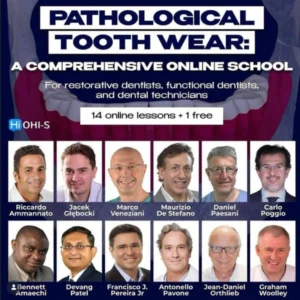

Pathological tooth wear: a comprehensive online school. For restorative dentists, functional dentists, and dental technicians
Original price was: $799.00.$49.99Current price is: $49.99.
Product details :
✔ Digital file type(s): 14 lessons + 2 free (20hH:45M)
Comprehensive online school on treating pathological tooth wear for restorative dentists, functional dentists, and dental technicians!
During this training, you will learn:
– Evidence-based approaches to diagnosing and planning treatment for pathological tooth wear
– Criteria for selecting materials for tooth restoration
– Protocols for managing wear: restoration and functional approaches
– Principles and guidelines for treating bruxism and tooth wear
– Protocols for working with total adhesive restorations.
Lesson 1.The role of bruxism in the mechanism of tooth wear
– Etiological factors and the mechanism of development of tooth wear: abrasion, erosion, attrition
– Bruxism and musculoskeletal dysfunctions: the main paradigms
– Occlusive splints in the diagnosis of bruxism:
– Bruxism without tooth wear
– Tooth wear without bruxism
– Tooth wear with bruxism.
– Bruxism vs erosion: distinctive features
– Increased tooth abrasion: histological aspects
– The effect of the quantity and quality of saliva on tooth wear
– Strategy for the management of patients with increased tooth wear: step-by-step protocol
– The role of the tongue in the development of tooth wear
– Relationship between gastroesophageal reflux, bruxism and pathological tooth wear
– Questionnaires that help identifies the true source of problems with tooth wear.
Recommended for: Prosthodontists, Functional dentists.
Lesson 2.Treatment of dental erosion as one of the factors of tooth wear development
– Erosion of teeth: definition and diagnosis
– Types of tooth wear: attrition, non-carious cervical lesions, abrasion, erosion
– Clinical signs of erosion
– Etiology of erosion development:
– Gastro-esophageal reflux disease
– Bulimia nervosa
– Gastric surgery
– Cyclic or psychogenic vomiting syndrome
– Pregnancy induced vomiting
– Chronic alcoholism
– Dietary
– Taking medications
– Industrial workers
– Professional wine tasters.
– Factors affecting the development of erosion: saliva, soft tissues of the oral cavity, temperature of drinks
– Prevention and control of erosion: step-by-step protocol
– Determination of the degree of erosion: BEWE index
– Method of recording and measuring erosion using a silicone key
– Tactics of managing patients with erosions: methods of protecting the damaged surface
– Hypersensitivity of teeth: diagnosis and principles of treatment.
Recommended for: Prosthodontists, Functional dentists.
Lesson 3.Composite protocol: index technique
– Philosophy of minimally invasive dentistry
– Free-hand layering technique
– Causes of tooth wear: friction, abrasion, erosion, perimolysis
– Copy-paste approach in adhesive restoration
– Index technique (single silicone key technique): advantages
– Index technique for tooth wear: digital and analog protocols
– New technique devised by the author of injection with thermo-viscose composites and double-layer mask
– Additional palatine incisor restorations: technique
– Adhesive restoration planning: aesthetic analysis and DSD, diagnostic Wax-up and Mock-up
– Fixation of composite overlays: adhesive protocol
– Durability of direct composite restoration with tooth wear
– Maintenance.
Recommended for: Prosthodontists, Functional dentists.
Lesson 4.Composite protocol: index technique. Introductory lesson
– Philosophy of minimally invasive dentistry
– Free-hand layering technique
– Causes of tooth wear: friction, abrasion, erosion, perimolysis
– Copy-paste approach in adhesive restoration
– Index technique (single silicone key technique): advantages
– Index technique for tooth wear: digital and analog protocols
– New technique devised by the author of injection with thermo-viscose composites and double-layer mask
– Additional palatine incisor restorations: technique
– Adhesive restoration planning: aesthetic analysis and DSD, diagnostic Wax-up and Mock-up
– Fixation of composite overlays: adhesive protocol
– Durability of direct composite restoration with tooth wear
– Maintenance.
Recommended for: Prosthodontists, Functional dentists.
Lesson 5.Classic way of prosthetic restoration of worn dentition
– Tooth wear: causes and diagnosis
– The main types of tooth wear
– Methods of treatment of pathological tooth wear
– Total rehabilitation vs dentistry of one tooth: principles of occlusion
– Algorithm of occlusal evaluation in case of pathological tooth wear
– Signs and symptoms of parafunction
– Reorganization approach: protocol and advantages of the method
– DAHL-technique: basic principles
– Limiting factors in the total rehabilitation of the dentition with pathological tooth wear.
Recommended for: Prosthodontists, Functional dentists.
Lesson 6.Classic Wax-up and Mock-up protocols for tooth worn treatment
– The main stages of total rehabilitation in case of pathological tooth wear
– Diagnostic Wax-up and Mock-up
– Plastering of models in the articulator: technique
– Features of modeling the palatine surface
– The technique of making composite veneers in a direct way using a silicone key
– Mock-up: methodology and criteria for Mock-up control in a week
– Adhesive total rehabilitation: DAHL technique
– The technique of restoring the anterior teeth:
– Using a transparent silicone key
– Injection formation technique
– Composite indirect facets.
– Stabilization of posterior teeth contacts: strategies and techniques
– Restoring posterior teeth with composite materials: techniques
– Restoration of posterior teeth by the imprint method: tips and recommendations
– Stabilization of treatment results: the use of a Michigan splint
– Maintenance protocol.
Recommended for: Prosthodontists, Functional dentists.
Lesson 7.Perfect VDO and CR in worn dentition treatment by Kois Center mentor
– Causes of pathological tooth wear
– Types of chewing: the relationship with the pathological tooth wear
– Range of function: norm and pathology, limited range
– Signs of pathological tooth wear
– Mechanical tooth wear: causes and mechanism of development
– Determination of the centric relation: methodology
– Principles of treatment of the tooth wear
– Principles of working with the Kois articulator: analog and digital protocol
– Kois deprogrammer: specifics of the work
– Criteria for restoring the correct vertical dimension.
Recommended for: Prosthodontists, Functional dentists.
Lesson 8.Total adhesive restorations – direct and indirect techniques
– Total rehabilitation using the injection formation technique: principles
– Methods of isolation of the working field
– Three-layer silicone key: operation protocol
– Wax-up and Mock-up in the protocol of total rehabilitation
– Adhesive protocol with tooth wear
– Method of forming composite material
– Indirect methods of total compositional rehabilitation: a three-stage protocol
– Planning based on facial features, aesthetic analysis
– Method of biologically oriented preparation
– Ceramic overlays and crowns: indications and protocols
– Total rehabilitation for erosion and abrasion: step-by-step protocol
– Increasing the vertical dimension of the occlusion: predictability and safety
– Laminate veneers made of zirconium dioxide: protocol.
Recommended for: Prosthodontists, Functional dentists.
Lesson 9.Bruxism: from management to oral rehabilitation. Part 1
– Definition of bruxism based on clinical examples
– Classification of bruxism
– Analysis and comparison between awake bruxism and sleep bruxism
– Evaluation of oral behaviors in relation to sleep disorders:
– Bruxism as a protective factor
– Bruxism as a risk factor
– Association with other disorders and health conditions.
– Clinical case analysis and bruxism evaluation:
– Patient evaluation and clinical examination
– Supplementary diagnostic exams that aid in bruxism assessment
– Identifying the risk factors associated with bruxism.
Recommended for: Prosthodontists, Functional dentists, Restorative dentist, General dentists.
Lesson 10.Bruxism: from management to oral rehabilitation. Part 2
– Cognitive-behavioral approach for patients diagnosed with bruxism
– Protocols for controlling other disorders and health conditions that may influence bruxism
– Protocols of splint therapy:
– Splint classification and analysis of different types
– Steps to designing splint appliances.
– Pharmacological approach to managing bruxism
– Evaluation of drugs inducing bruxism
– Analysis of medications reducing bruxism
– Full-mouth rehabilitation protocols.
Recommended for: Prosthodontists, Functional dentists, Restorative dentist, General dentists.
Lesson 11.Dental anti-aging: main principles when working with worn dentition
– Tooth wear: definition and classification
– The difference between physiological and pathological tooth wear
– Etiopathogenesis of pathological tooth wear
– Preventive protocols for pathological tooth wear
– Types of tooth wear and the compensatory response of the stomatognathic system
– Classification of tooth wear based on localization
– Protocols for interdisciplinary diagnosis of worn dentition
– Orthodontics prior to full-mouth rehabilitation: why, when, and how?
– Localized restorative protocols
– Protocols for full-mouth reconstruction
– Maintenance over time of dental rejuvenation.
Recommended for: Prosthodontists, Functional dentists, Restorative dentist, General dentists.
Lesson 12.Gummy smile and short tooth syndrome: interdisciplinary aesthetic rehabilitation
– Etiopathogenetic causes of gummy smile (GS) and short tooth syndrome (STS)
– Smile line assessment and its application in aesthetic evaluation
– The proposed classification system for adult patients with GS and STS and the diagnostic process used within this classification
– Biological and restorative approaches employed in treating gummy smile and short tooth syndrome
– The significance of surgically exposing the cemento-enamel junction when addressing gummy smile cases
– Compensatory eruption with orthodontics
– Protocols for balancing the gingival smile line
– Analysis of the interdisciplinary approach to treatment
– Maxillofacial surgery and aesthetic rehabilitation
– Protocols of interdisciplinary aesthetic rehabilitation
– Analysis of full-mouth restorative protocols: from smile analysis to post-treatment evaluation.
Recommended for: Prosthodontists, Functional dentists, Restorative dentist, General dentists.
Lesson 13.Psycho-behavioral approach, splint therapy, composite restorations
– Addressing excessive bruxism through a psycho-behavioral approach
– Bruxism treatment modalities:
– Occlusal splint and its limitations
– Importance of a dual psychological approach and stress management.
– Holistic approach to bruxism treatment and nasal breathing for improved sleep quality
– Integration of proprioceptive stimulation:
– Occlusal proprioceptive stimulation
– Reinforcing the psycho-behavioral approach.
– Utilizing composite restorations for effective results.
Recommended for: Prosthodontists, Functional dentists, Restorative dentist, General dentists.
Lesson 14.The simple prosthetic approach of tooth wear treatment. DAHL technique
– The rate and severity of wear
– Monitoring of tooth wear
– Establishing a new occlusion
– Increasing the VDO
– Centric relation
– Protocols for the choice of occlusal scheme and occlusal analysis
– Choice of articulator
– Materials for crown restoration
– Parafunctiona and worn dentition
– The Dahl technique.
Recommended for: Prosthodontists, Functional dentists, Restorative dentist, General dentists.
Lesson 15.Treatment of Worn Dentition with Ceramic Restorations
– Step-by-step analysis of clinical cases of worn dentition:
– Diagnosis and case clinical history analysis
– Radiological, functional, and occlusal analysis
– Treatment planning and objectives of the treatment
– Facially generated treatment planning and digital smile design
– Splint therapy and lower jaw repositioning protocols
– Evaluation of occlusal plane on the articulator
– Protocols for adhesive mock-up and analysis of neuromuscular pattern.
– Clinical performance of porcelain laminate veneers
– Incisal WRAP veneer prep vs. Butt-joint
– Tooth wear evaluation system
– Protocols to increase the occlusal vertical dimension (OVD)
– Ceramic veneers or direct molded veneers?
Recommended for: Prosthodontists, Dental technicians, General dentists.
Lesson 16.Prosthodontic and interdisciplinary bruxism treatment
– Goals and objectives of prosthodontic treatment
– The concept of “non-invasive” in the treatment of bruxists
– Rehabilitation or aesthetic dentistry: treatment tactics for bruxism
– Indications for changing occlusal relationships
– Full crowns or partial adhesive restorations: selection algorithm
– Digital bruxism treatment protocol: benefits
– Total prosthetic rehabilitation: clinical examples
– Occlusion: a role in bruxism treatment planning
– An interdisciplinary approach in the treatment of bruxism
– Occlusion on implants: risks of bruxism.
Recommended for: Orthodontists, Prosthetists, Gnathologists, General dentists.
Related products
-
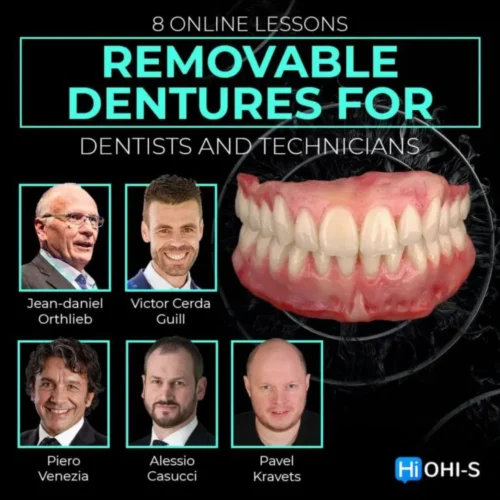
OHI-S REMOVABLE DENTURES FOR DENTISTS AND TECHNICIANS
Original price was: $325.00.$46.99Current price is: $46.99. -
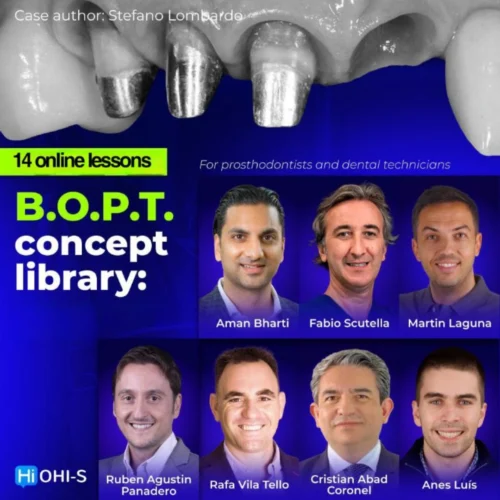
B.O.P.T. Concept Encyclopedia For Prosthodontists and Dental Technicians
Original price was: $400.00.$49.99Current price is: $49.99. -
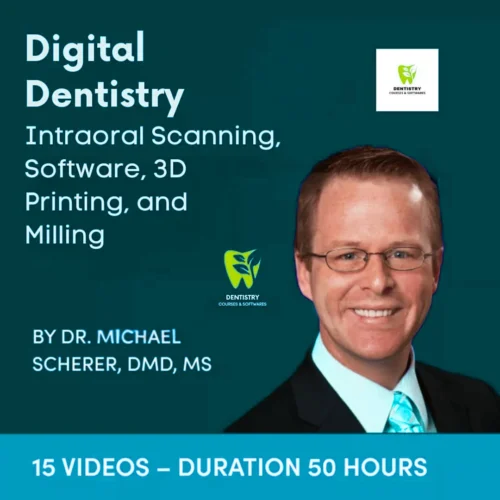
Digital Dentistry: Intraoral Scanning, Software, 3D Printing, and Milling
Original price was: $900.05.$50.00Current price is: $50.00.